Global Financial Secrecy Index: Hong Kong, Singapore’s ranks rise

Hong Kong and Singapore have increased their ranking for financial secrecy, with the Chinese territory rising to number two, behind only Switzerland in a 2015 index of the world’s offshore havens, compiled by the Tax Justice Network (TJN).

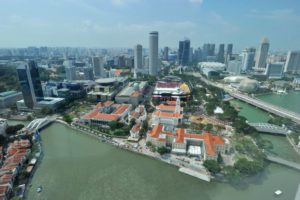
Both the Asian financial hubs have made insufficient reforms to their corporate secrecy regimes, according to the London-based TJN, which campaigns for greater transparency in finance. Singapore’s ranking moved to fourth from the fifth place it held in the organisation’s previous index in 2013, when Hong Kong placed third.

“Singapore, in fourth place, poses many of the same threats that Hong Kong does: a lack of serious reforms to its corporate secrecy regime; a lack of interest in creating country-by- country reporting or in creating public registries of beneficial ownership,” the TJN said.

The two cities each account for about 4 per cent of the global market for offshore financial services, the organisation said. The hubs are well exposed to offshore flows because of rising assets under management and their status as regional financial hubs, according to the TJN.

“We do not have laws protecting bank secrecy and so we have never attracted foreign capital by such means,” a spokesman for Hong Kong’s Financial Services and the Treasury Bureau said in an e-mailed response to the TJN survey. “Hong Kong has all along been highly supportive of international efforts to enhance tax transparency and combat tax evasion,” the spokesman added.

The US was ranked third for its refusal to take part in a global system for exchanging bank data created by the Organisation for Economic Cooperation and Development.

Source: http://www.business-standard.com/article/economy-policy/global-financial-secrecy-index-hong-kong-singapore-s-ranks-rise-115110301720_1.html


Moody’s Raises Indian Banks’ Outlook to Stable

Rating agency Moody’s Investors Service revised its outlook on India’s banking system to “stable” from “negative” on Monday, saying an improving economy would help temper problem-loans on banks’ books.

Moody’s, however, cautioned that any recovery in asset quality would be gradual given the high debt levels in Indian companies.

Indian banks, particularly state-run banks, have been saddled with bad loans estimated at nearly $50 billion as the economy slowed sharply in the last three years.

But recent earnings reports, including from top private sector lender ICICI Bank, suggested asset quality may be stabilising.

Moody’s said it expected India’s economy to grow around around 7.5 per cent in 2015 and 2016 each, supported by low inflation and gradual implementation of structural reforms.

“The stable outlook on India’s banking system over the next 12-18 months reflects our expectation that the banks’ gradually improving operating environment will result in a slower pace of additions to problem loans, leading to more stable impaired loan ratios,” Moody’s said in the statement.
“However, the recovery in asset quality will be U-shaped rather than V-shaped, because corporate balance sheets remain highly leveraged.”
Moody’s also noted that capital levels remained weak for state-owned banks, with common Tier 1 ratios of only 6 to 10 per cent, though lenders retain plentiful of access to funding and liquidity.

Moody’s had downgraded India’s banking system outlook to “negative” in November 2011.

The ratings agency had upgraded India’s sovereign outlook to “positive” in April, while retaining its rating at “Baa3”.

Source: http://profit.ndtv.com/news/banking-finance/article-moodys-ups-indian-banking-sector-outlook-to-stable-1238974

Commerce ministry firming up Africa-focused export strategy

The commerce department is firming up an export strategy focused on Africa, giving a new dimension to the government’s strategic push for ties with the continent that could offer a large market for Indian goods at a time of slowing global demand.

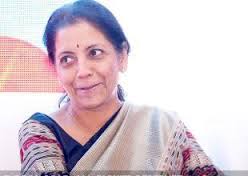
While India has offered a $10 billion credit line to Africa, the department has extended the benefits under the Merchandise Exports from India (MEIS) scheme to many goods headed for Africa to make the most of this credit. Senior government officials led by commerce minister Nirmala Sitharaman will next week apprise Parliament’s consultative committee on plans to address India’s continuously falling exports, with a focus on Africa and the country’s neighbours. The meeting is to be in held in Goa on November 6-7.

“Since the situation is not good globally, we have decided to focus on exports to Africa and our neighbouring countries. We can use our competitiveness in these markets to increase exports. We are working on an export strategy for next week’s meeting,” said a commerce department official, who did not wish to be named.
At the meeting the committee will also discuss Foreign Trade Policy (FTP) 2015-20 and its implications on exports, the official said. The steady decline in exports has triggered apprehensions that India may even miss last year’s exports figure of $310.5 billion. Merchandise exports fell nearly a quarter in September, the tenth straight month of decline, raising worries that shipments may fall short of last year’s levels.
The Directorate General of Foreign Trade (DGFT) has included exports of textiles and ready-made garments including cotton fabrics, both woven and knitted, and made-ups to the African countries under the MEIS. The industry, which has been grappling with falling exports, has approved of this strategy.

Following the revision, exports of value-added and labour intensive products such cotton dyed and printed fabrics, and made-ups, to African countries such as Mauritania, Mali, Niger, Benin, Angola, Senegal, Togo, Ghana, Kenya and Tanzania are expected to receive a huge boost. “This is a very positive step taken by the government and has come as a huge relief to the exporters of cotton textiles who are faced with declining exports,”Texprocil chairman RK Dalmia said in a statement.

PM Narendra Modi promises $10-bn credit line to Africa

Promising $10 billion in credit to Africa to back a “partnership of prosperity” and pitching a broad alliance for global reform, Prime Minister Narendra Modi called for a permanent solution to the food security and agriculture subsidy issues at the Nairobi WTO meet, to be held later this year.

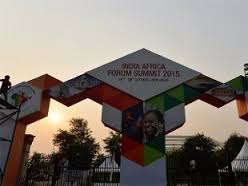
Addressing the inaugural session of the 3rd India-Africa Forum Summit (IAFS), Modi also made a strong pitch for deeper India-Africa ties in key areas of counter-terrorism, climate change and UN reforms. His nearly half-an-hour speech at the session was attended by 41 heads of state and government, including Presidents Jacob Zuma of South Africa, Mohammadu Buhari of Nigeria and Abdel Fattah al-Sisi of Egypt,t and hundreds of senior officials from 54 African countries.

He said India and Africa also seek a global trading regime that serves development goals and improves trade prospects. “When we meet at the Nairobi Ministerial of the WTO in December, we must ensure that the Doha Development Agenda of 2001 is not closed without achieving these fundamental objectives.”

The WTO’s General Council had accepted India’s demand for extending the peace clause till a permanent solution is found for its food stockpiling issue. For a permanent solution to the food security issue, India had proposed either amending the formula to calculate the food subsidy cap of 10%, which is based on the reference price of 1986-88, or allowing such schemes outside the purview of subsidy caps. If no solution is found by the agreed deadline of December 31, the peace clause will continue till the time a solution is found.

Calling for stronger ties in the strategic areas of counter-terrorism and climate change as well as on UN reforms, Modi told the visiting leaders, “We will raise the level of our support for your vision of a prosperous, integrated and united Africa that is a major partner for the world.”

Source: http://www.financialexpress.com/article/economy/pm-narendra-modi-promises-10-bn-credit-line-to-africa/158751/

SEBI cuts IPO paperwork drastically

From December 1, companies filing for a public issue of securities (IPO/FPO and the like) have to come out with abridged prospectus containing all material and appropriate information on the issue to enable informed decision-making by investors.

Amending its public issue regulations, equities and commodities market regulator SEBI said the abridged prospectus should consist of five sheets of paper printed on both sides in A4 size booklet form.

SEBI has mandated that information given in tabular format should not be repeated in text format in the abridged prospectus. The abridged prospectus would also contain the application form in a manner by which tearing off the application form would not mutilate the prospectus, SEBI said.

Generic information not specific to the issuer shall be brought out in the form of a General Information Document, said SEBI.

Govt approves 16 FDI proposals worth Rs 4,722 cr

The government has cleared 16 foreign investment proposals, including that of HDFC Capital and Ageon Religare Life Insurance Company, amounting to Rs 4,722 crore.
The investment proposals were approved following the recommendation for the same by the Foreign Investment Promotion Board (FIPB), headed by economic affairs secretary Shaktikanta Das.
“The government has approved 16 proposals of foreign direct investment amounting to Rs 4,722 crore,” the finance ministry said in a statement.
However, it rejected 8 proposals including that of Cipla Health Limited and Apollo Hospitals Enterprise Limited.
The Board cleared proposal of HDFC Capital Advisors Limited which alone entails investments of Rs 2,400 crore.
The company sought approval for issue of units to Green Light, it said.
“HDFC Fund proposes to make investments in equity, equity linked instruments, redeemable preference shares, non-convertible debentures and other debt securities of listed or unlisted investee companies engaged in real estate construction development projects which are permitted under the SEBI AIF Regulations as a Category II AIF,” it said.
Besides, Ageon Religare Life Insurance’s proposal worth Rs 559.96 crore was cleared by FIPB.
The approval was sought for the transfer of shares to Aegon India Holding thereby raising the foreign shareholding from 26 percent to 49 percent.
Among others, Sun Pharma Research Advanced Company Ltd’s proposal worth Rs 250 crore, Synergia Life Sciences Pvt Ltd (Rs 40 crore) and the post facto approval for Aditya Birla Nuvo’s Rs 377 crore plan were cleared during a meeting held on 29 September.

India takes fresh guard to boost trade and economic ties

The slowdown in China provides India another opportunity to make deep inroads into the African continent, strengthen business and economic ties.

The India-Africa summit will be a perfect setting for business communities from India and African nations to explore areas of cooperation and provide a roadmap to their governments.

Economic and trade relations between India and Africa have been on the slow track despite several Indian companies having a presence in the continent. The current trade is estimated around $75 billion. Experts say there is potential for this to go past $100 billion. But Commerce and Industry Minister Nirmala Sitharaman is cautious not to cite a number. More than 165 Indian companies invested in Africa between January 2003 and July 2015 in telecom, infrastructure, pharmaceuticals, healthcare and elsewhere.

India official says deeper cooperation in agriculture and agro-processing, engineering, textiles, leather and pharmaceuticals would have a positive impact on food security, raise health standards and create jobs in Africa and India. Food processing is a key area identified by both sides. Tourism too holds promise.

“There is clear intention that we will participate in African manufacturing and they’ll do whatever they can do to Make in India,” says Rajan Bharti Mittal, vice chairman of Bharti Enterprises.

Several African countries have high growth and are keen to engage with India.

Others would want Indian expertise in various sectors to speed up economic expansion. “There’s been growing interest in many African countries to do more business with the East and that includes India and China… Africa is opening to everybody who wants to do business,” says Zimbabwe trade minister Mike Bimha.

But there are issues to be addressed for smoother trade ties. Connectivity, banking links and security issues must be resolved. Trade experts say India needs to reorient strategy to boost ties.

“For the Africa-India trade potential to be realised, India must adopt an investment-led approach. We should support our African partners in development projects and handhold them in executing these efficiently,” says Biswajit Dhar, professor at JNU.